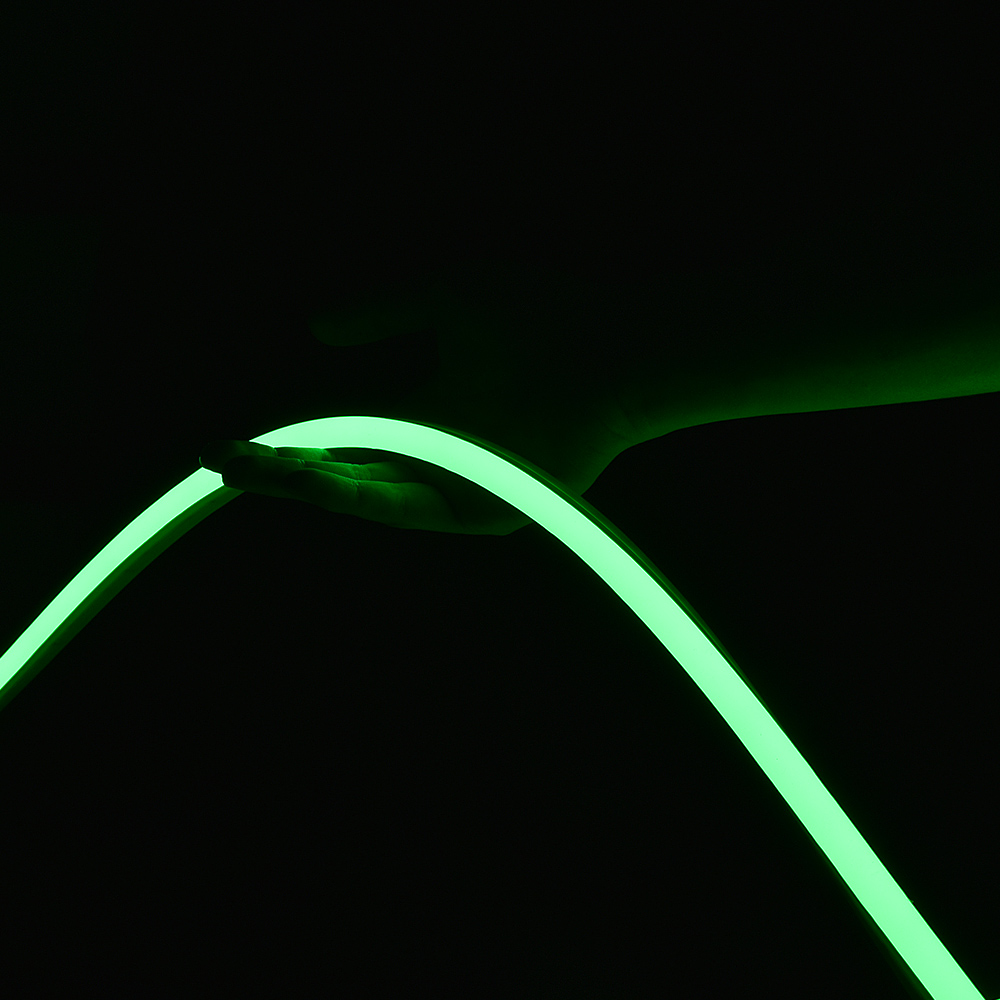
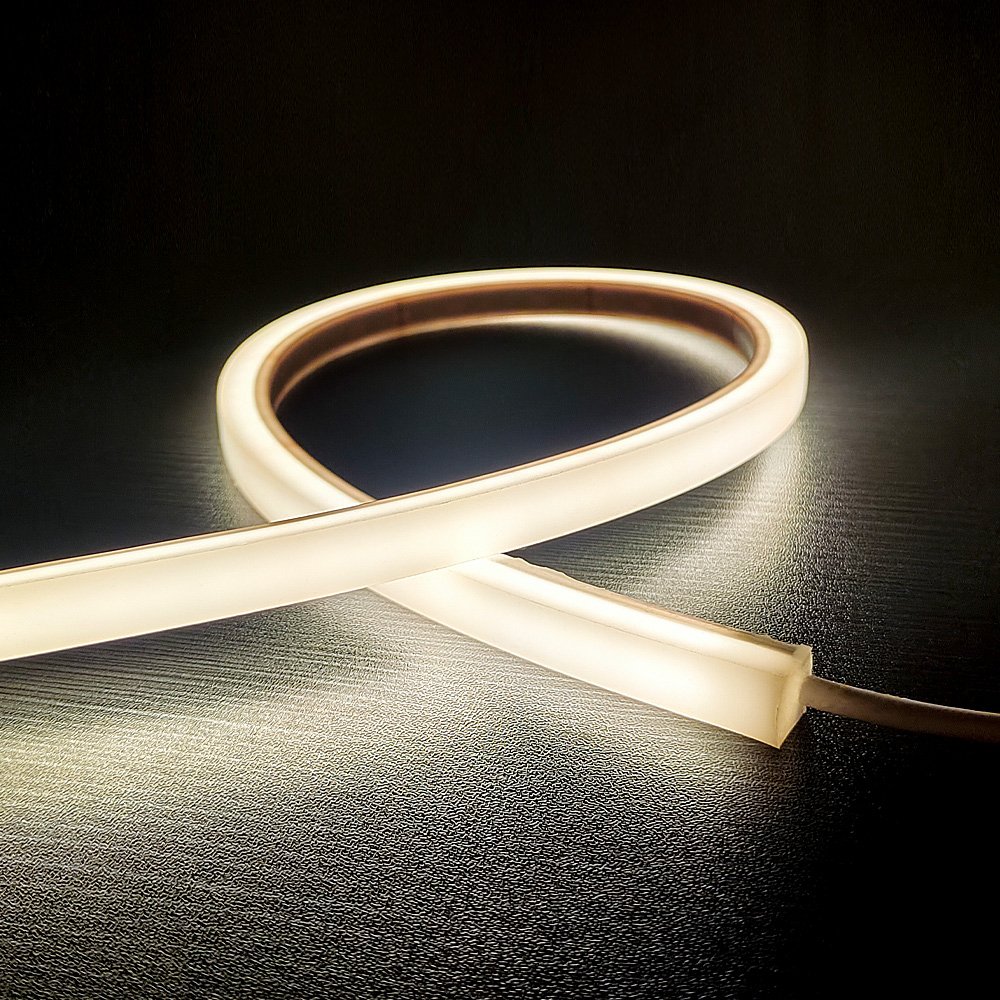
IP68 LED Neonflex is the fundamental solution for creating attractive, reliable lighting in environments where water and weather resistance are non-negotiable. It is a flexible, waterproof LED strip designed to provide a seamless, glowing light effect, mimicking the look of traditional glass neon without its fragility—but built to withstand the toughest outdoor and underwater conditions.
Understanding the Name: “Neonflex”
The term “Neonflex” combines two key features:
Neon: It replicates the smooth, continuous, and vibrant glow of classic glass neon signs. Unlike standard LED strips that can show individual points of light, Neonflex uses an optical diffuser to create a homogeneous, shadow-free line of light.
Flex: It is highly pliable. This flexibility allows it to be bent, curved, and shaped into custom designs, making it far more versatile than rigid glass neon. It can be used to create everything from Facade and Contour lighting for buildings to outlining architectural features.

Decoding the IP68 Rating
The IP68 rating is the key to this product’s exceptional durability. “IP” stands for Ingress Protection, and the two digits signify its level of protection:
6 (First Digit – Solids): This indicates the highest level of protection against solid objects, meaning it is dust-tight. No dust or dirt can enter the unit.
8 (Second Digit – Liquids): This signifies that the fixture is suitable for continuous immersion in water under specific conditions. For many IP68 Neonflex products, this means they can be safely submerged up to 3 meters deep, making them ideal for use in swimming pools, fountains, and other water features.
Key Construction and Materials
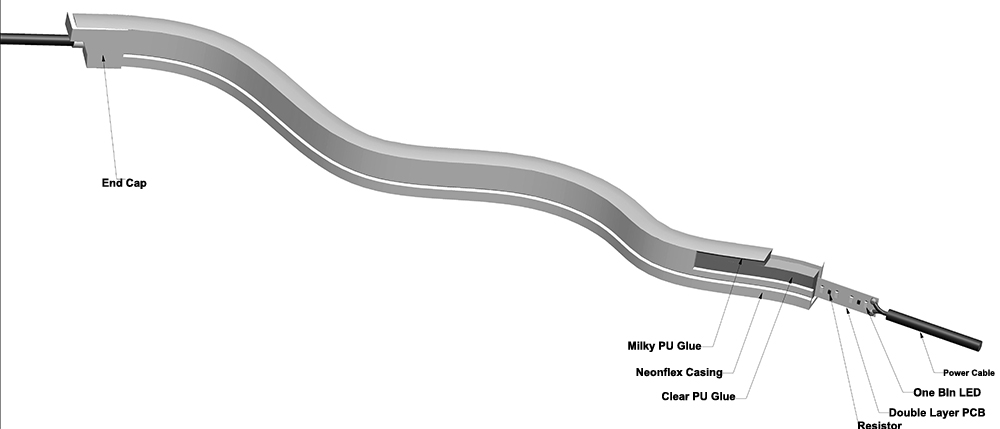
To achieve its IP68 rating and neon-like glow, Neonflex is constructed with several specific components:
Encapsulation: The LED strip is encased in a durable, waterproof material. The two primary materials used are TPU or Silicone cover and Polyurethane (PU). PU is often preferred for its superior resistance to UV rays, chemicals, and abrasion, preventing yellowing and breakage over time .
“True” IP68 Manufacturing: High-quality IP68 Neonflex uses an encapsulation with Polyurethane(PU), the PCB and cable was 360°protected by the PU glue. This ensures that the protective casing is seamless, which is critical for maintaining its waterproof integrity.
Inner Components: Inside the waterproof casing is a flexible printed circuit board (PCB) with Lumileds high-brightness LEDs, such as SMD 5050 or SMD 2835 chips. These provide the light source, which is then diffused by the outer casing to create a smooth, uniform glow.

Where is IP68 LED Neonflex Used?
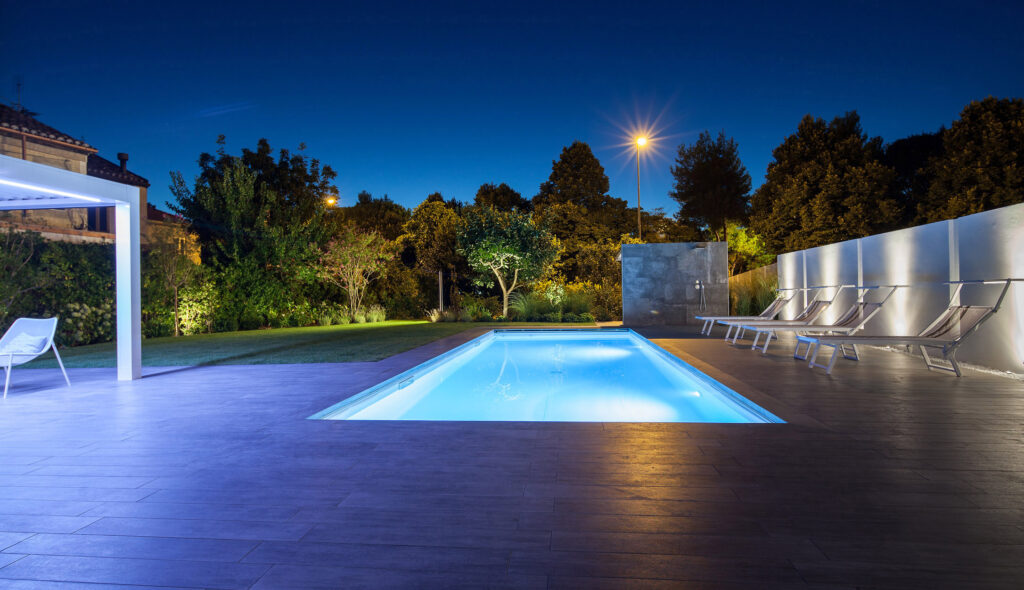
Its superior waterproofing makes IP68 Neonflex the premier choice for demanding environments where lesser-rated products would fail. Common applications include :
Swimming Pools & Fountains: Directly submerged underwater for steps, edges, and perimeter lighting.
Exterior Building Facades: Outlining the contours of buildings to create dramatic architectural illumination.
Landscape Lighting: Illuminating gardens, walkways, and ponds, where it’s exposed to rain and moisture.
Marine Applications: On boats, docks, and yachts where saltwater and constant moisture are present.
For comparison, a standard indoor LED strip might have an IP20 rating (no water protection), while a typical outdoor strip might be IP44 or IP65, offering protection against splashes or low-pressure water for short times but not full submersion.
Important Considerations
While IP68 Neonflex is a powerful and durable product, a few key points should be kept in mind:
Cutting: Although many Neonflex products are designed to be cut to length at designated intervals, cutting the strip often voids the IP68 rating at the cut point. For the best waterproofing, the IP68 led neon flex is can not cut for underwater project, to order in customized length in factory is the best solution.
Installation: Achieving and maintaining the IP68 rating also depends on using the correct waterproof connectors, sealants, and junction boxes at the connection points to the power supply, and it would be necessary that the connector shouldn’t be merged into the water so as to avoid the short-circuit, and the bending should be in compliance both the bending type and the min bending radius.